
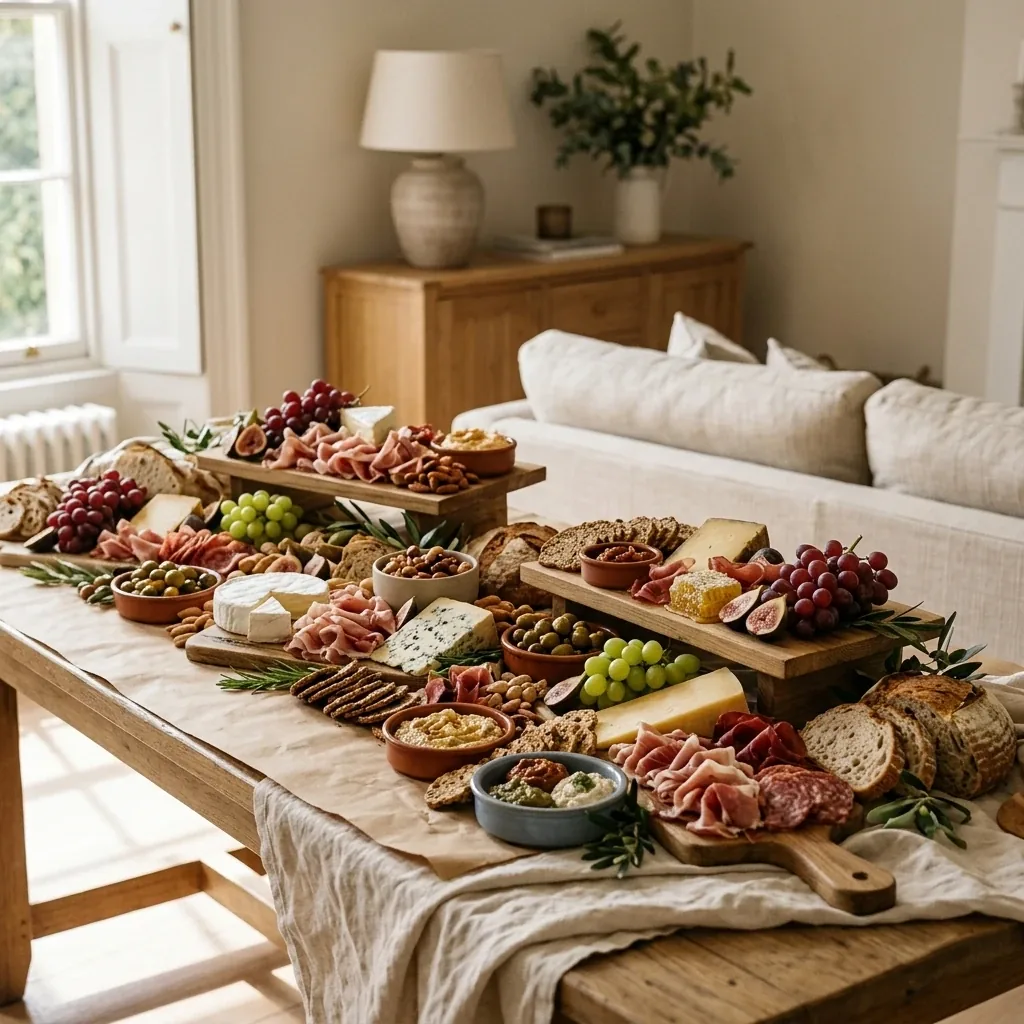
A grazing table or charcuterie business in Ontario is regulated as a full food premise, because cheese, cured meat and cut fruit need refrigeration. Health units class them as higher-risk food: Peel Public Health lists meats and cheese among high and moderate risk foods, and Ottawa Public Health says cut fruit garnishes need refrigeration at 4 °C or colder. The low-risk exemption in O. Reg. 493/17, s.3.1, then stays out of reach, and the kitchen needs handwashing stations, proper dishwashing equipment and a trained food handler on site every hour it operates. In Ottawa, Zoning By-law 2026-50, s.301, limits home-based food businesses to low-risk foods, so the boards are prepared in a commercial kitchen, and the City's food premises licence, about $298 a year, applies to any business that prepares food.
The whole question turns on one definition. Ontario's Food Premises Regulation calls low-risk food any food that is not potentially hazardous, and potentially hazardous food is food that can support the growth of infectious or toxigenic micro-organisms and requires time and temperature control (s.1(1)). The Ministry of Health's guide to starting a home-based food business gives the low-risk examples: most breads and buns without meat or cream filling, most baked goods with no custard, chocolate, hard candies and brittles, fudge and toffees, coffee beans and tea leaves, granola, trail mix, nuts and seeds, and cakes with icing that does not need refrigeration, brownies, muffins and cookies. Cheese, cured meat and fresh fruit are absent from that list. Peel Public Health names meats and dairy products, cheese included, as high and moderate risk foods, and Ottawa Public Health says fresh cut fruit or vegetables used as garnishes turn a product into one that needs refrigeration at 4 °C or colder.
Section 3.1 lifts three requirements for premises that prepare and serve only low-risk food: handwashing stations (s.7(3)(c)), dishwashing equipment (s.18) and food handler training on site (s.32). A grazing table business keeps all three. Section 18 asks for mechanical dishwashing equipment or a two- or three-compartment sink set-up, and s.32 asks for at least one food handler or supervisor with completed food handler training on the premises during every hour it operates. Peel's page for home-based businesses that make higher-risk food says the same thing in kitchen terms: a designated hand washing sink in the food preparation area, a two- or three-compartment sink or a commercial dishwasher, food handler certification, and domestic dishwashers are unacceptable.
Ottawa closes the home route for this menu. Zoning By-law 2026-50, s.301, permits a home-based business wherever a residential use is permitted, then limits a home-based food business to the preparation of low-risk foods under the Food Premises Regulation standards, bars it from accessory buildings and yards, and rules out on-site dining and on-site employees. The same section adds that businesses requiring a City business licence are not permitted as home-based businesses, and a food premises licence is one of those. Elsewhere in Ontario the answer depends on the municipality and the health unit: the Ministry guide tells readers to review local zoning by-laws, municipal permits and licensing requirements before contacting the public health unit, and to contact that unit to say they are a new food operator.
The City of Ottawa's food premises licence page says a licence is required for any business that prepares food, and names catering establishments and shared commercial kitchens in the list. The approximate cost is $298 a year, every licence expires on March 31, and one condition is $2 million in commercial general liability insurance, proven by a valid certificate. The page exempts home-based businesses that operate exclusively from a residential unit and prepare and sell only low-risk food items; a grazing business sits outside that exemption for the same reason it sits outside s.3.1. If you rent hours in a shared commercial kitchen that holds its own licence, ask the City's Business Information Officer what your business needs on top of it.
The practical route for a new grazing business in Ottawa is renting hours in a shared commercial kitchen and carrying finished components to the event. The regulation then sets what the kitchen, the van and the shopping have to do. Potentially hazardous food is stored and transported at an internal temperature of 4 °C or lower, or 60 °C or higher (s.27). Refrigerators must be big enough for the volume and carry accurate thermometers that are easy to read (s.30). Food that the law subjects to government inspection comes from an inspected source, and purchase records stay on the premises until at least the first anniversary of each purchase (s.29). The only meat permitted at a food premise is meat from animals inspected and approved under Ontario's or Canada's meat rules, stamped and labelled accordingly (s.38), so cured meats come from a supplier who can show that. Our commercial kitchen rental guide lists the Ottawa kitchens that publish hourly terms.
Hold time sets the size and the shape of the table. Health Canada's food safety advice is to discard any food left out for more than two hours, and on hot summer days to keep food at room temperature for one hour at most; it describes 4 °C to 60 °C as the temperature danger zone where bacteria grow. A grazing table is food left out by design, so the plan works backwards from that window: the build finishes shortly before guests arrive, the surface is sized for the first wave, and the second wave stays cold until it goes out. Food left after the window is discarded, and the client hears that rule when they book.
Grazing tables sell per guest, because the client counts guests and almost every cost scales with them. OH! Catering's published prices show one way to set it out: styled tables from $42 per guest, a working range of $42–$65 per guest, plus applicable taxes, a $600 event minimum before delivery and taxes, and $45 for delivery and on-site styling within 25 km, for roughly 12 to 50 guests. In a structure like this the per-guest rate carries ingredients and prep hours. The minimum protects small orders, where shopping, kitchen time, travel and the build take nearly as long as for a larger table. The delivery line keeps travel and on-site time visible, so the client sees exactly what changes when the address changes.
ISED's financial performance data for caterers (NAICS 72232), data year 2024, gives a starting cost split for any per-guest price. Across 4,009 small and medium caterers with revenue between $30,000 and $5 million, purchases, materials and sub-contracts averaged 36.4% of revenue, indirect labour and commissions 19.2%, direct wages and benefits 9.3%, rent 7.5%, advertising 1.3% and insurance 1.1%, and average net profit was 8.2%. On every $100 a client pays, that is $36.40 for purchases, materials and sub-contracts and $8.20 left as profit in the average business. Applied to any per-guest rate, the same shares show how much of each guest's price can go to cheese, meat and fruit before the margin is gone.
The spread around that average is wide. In the same ISED data, the bottom quarter of caterers by profit margin averaged a net margin of -13.1%, the lower-middle quarter 4.5%, the upper-middle quarter 17.1% and the top quarter 50.9%, and 74.8% of caterers in the whole set were profitable. Those are Canada-wide averages across every kind of caterer; the data has no separate line for grazing or charcuterie businesses. Our catering startup cost guide adds the one-off costs of opening in Ottawa, from the licence to insurance.
A styled build is a production job in four parts. Prep in the kitchen: cheese cut and wrapped, meat folded, fruit washed and cut last, every component labelled and chilled. Transport: coolers or a refrigerated vehicle holding 4 °C or lower, with a thermometer reading checked and written down. Build on site: linen, boards and risers first, then the anchors such as whole cheeses and bowls, then cured meat and fruit, then the dry fill of breads, crackers and nuts. Close: an ingredient and allergen card in front of each item, a set time when perishable items come down, and a plan for leftovers and serving pieces agreed with the host.
The equipment list is short and reusable: boards and platters in two or three sizes, risers, linens, serving utensils for each item, insulated carriers, ice packs, probe and fridge thermometers, labels and a printed ingredient list for each table. The dry fill comes from the low-risk side of the Ministry's list, so it can travel at room temperature; every other component rides cold. Buying into a franchise system is the other route, and our guide to catering franchises in Canada compares what franchisors publish about fees and investment.
OH! Catering builds grazing and celebration tables in Ottawa and Kanata. OH! is preparing a partner programme; interest can be registered on our catering franchise page.
Grazing-table foods against Ontario's low-risk list
| Item | On the Ministry's low-risk list? | What the sources say |
|---|---|---|
| Soft and hard cheeses | No | Peel Public Health names cheese among high and moderate risk foods |
| Cured and sliced meats | No | Peel names meats; O. Reg. 493/17, s.38 admits only inspected meat |
| Fresh cut fruit and vegetables | No | OPH: cut fruit or vegetable garnishes make a product need refrigeration at 4 °C or colder |
| Breads and buns without meat or cream filling | Yes | Ministry guide: most breads and buns |
| Nuts, seeds, granola and trail mix | Yes | Ministry guide |
| Chocolate, fudge, toffee and brittle | Yes | Ministry guide |
| Cookies, brownies, muffins, cakes with shelf-stable icing | Yes | Ministry guide |
What $100 of catering revenue pays for, ISED averages for caterers, data year 2024
| Line | Share of revenue | Of each $100 |
|---|---|---|
| Purchases, materials and sub-contracts | 36.4% | $36.40 |
| Labour and commissions (indirect) | 19.2% | $19.20 |
| Wages and benefits (direct) | 9.3% | $9.30 |
| Rent | 7.5% | $7.50 |
| Advertising and promotion | 1.3% | $1.30 |
| Insurance | 1.1% | $1.10 |
| Net profit | 8.2% | $8.20 |
OH! Catering's published price lines, read as a pricing template
| Line | OH! figure | What the line does |
|---|---|---|
| Per guest | $42–$65 per guest | Scales with the guest count |
| Starting rate | $42 per guest | Styled share table at grazing level |
| Event minimum | $600 | Set before delivery and taxes |
| Delivery and on-site styling | $45 within 25 km | Travel and time at the venue |
| Guest range | roughly 12 to 50 guests | The table sizes the kitchen plan is built for |
| Tax | plus applicable taxes | Added on top of the quoted price |
Common questions
Can I start a charcuterie business from home in Ontario?
Yes, where local zoning allows it and the home kitchen meets the full Food Premises Regulation, because Peel Public Health and other health units class meats and cheese as higher-risk food. Peel Public Health lists what that means: a designated hand washing sink, a two- or three-compartment sink or commercial dishwasher, and food handler certification. In Ottawa the answer is no, since Zoning By-law 2026-50, s.301, limits home-based food businesses to low-risk foods.
Do I need a licence to sell grazing tables in Ottawa?
Yes. The City of Ottawa requires a food premises licence for any business that prepares food, at about $298 a year, expiring each March 31, with $2 million in commercial general liability insurance. The licence exemption covers only home-based businesses that prepare and sell low-risk food, which a cheese and charcuterie menu is not. If you rent hours in a shared kitchen that holds its own licence, confirm with the City's Business Information Officer what your business needs.
How long can a grazing table sit out?
Two hours, by Health Canada's advice to discard any food left out longer, and one hour on hot summer days. Plan the table for the first wave, keep the second wave at 4 °C or lower until it goes out, and set the time the perishable items come down before the event starts.
Are charcuterie businesses profitable?
8.2% is the average net profit margin of Canadian caterers in ISED's data for 2024 (NAICS 72232, businesses with $30,000 to $5 million in revenue), and 74.8% of them were profitable. ISED has no separate line for grazing or charcuterie businesses, so price each table from its own costs; purchases, materials and sub-contracts average 36.4% of revenue across caterers.
How much should you charge for a grazing table?
$42–$65 per guest is what OH! Catering publishes in Ottawa, plus applicable taxes, with a $600 event minimum and $45 for delivery and on-site styling within 25 km. Build your own rate from food cost, kitchen hours, build time and travel, and set a minimum so small orders still cover the fixed hours.
How to Start a Grazing Table Business in Ontario — the short version
- Peel Public Health lists meats and cheese among high and moderate risk foods; OPH says cut fruit garnishes need refrigeration at 4 °C or colder.
- The s.3.1 low-risk exemption stays out of reach: handwashing stations, dishwashing equipment and a trained food handler all apply.
- Ottawa limits home-based food businesses to low-risk foods (Zoning By-law 2026-50, s.301).
- City of Ottawa food premises licence: about $298 a year, with $2 million in liability insurance.
- Health Canada: discard food left out more than two hours, one hour on hot summer days.
- ISED 2024: caterers spend 36.4% of revenue on purchases and keep 8.2% as net profit on average.
- Price per guest, with an event minimum and a separate delivery line.
Sources: Ontario — O. Reg. 493/17 Food Premises, ss.1, 3.1, 18, 27, 29, 30, 32 and 38; Ontario Ministry of Health — A Guide to Starting a Home-based Food Business (November 2021); Ottawa Public Health — Operating a low-risk home-based food business; Region of Peel — Starting a home-based food business; City of Ottawa — Zoning By-law 2026-50, Part 3, s.301 home-based business; City of Ottawa — Food premises licence; Health Canada — Food safety tips for barbecuing (room-temperature limits, danger zone); ISED — Canadian Industry Statistics, financial performance, Caterers (NAICS 72232), data year 2024.
OH! Catering is preparing a franchise for styled share tables and Ukrainian dishes. Read about The OH! Catering franchise.
Thinking of opening a catering business?
OH! is looking for its first franchise partners. The application takes two minutes, and the terms come in a disclosure document before anything is signed.
Apply for the franchise