
Receptions · Ottawa

Cocktail Reception Catering in Ottawa

Food that keeps up with a standing crowd.

A reception is a standing event with a crowd in motion, and the catering is planned around that motion: where the display sits, how many pieces each guest takes in the first twenty-five minutes, what a two-bite piece can be built on, and what happens to the display after a speech. This page carries the reception format and the canapé menu together — flow, timing, piece counts, the hot and cold split, and how food that small gets labelled.

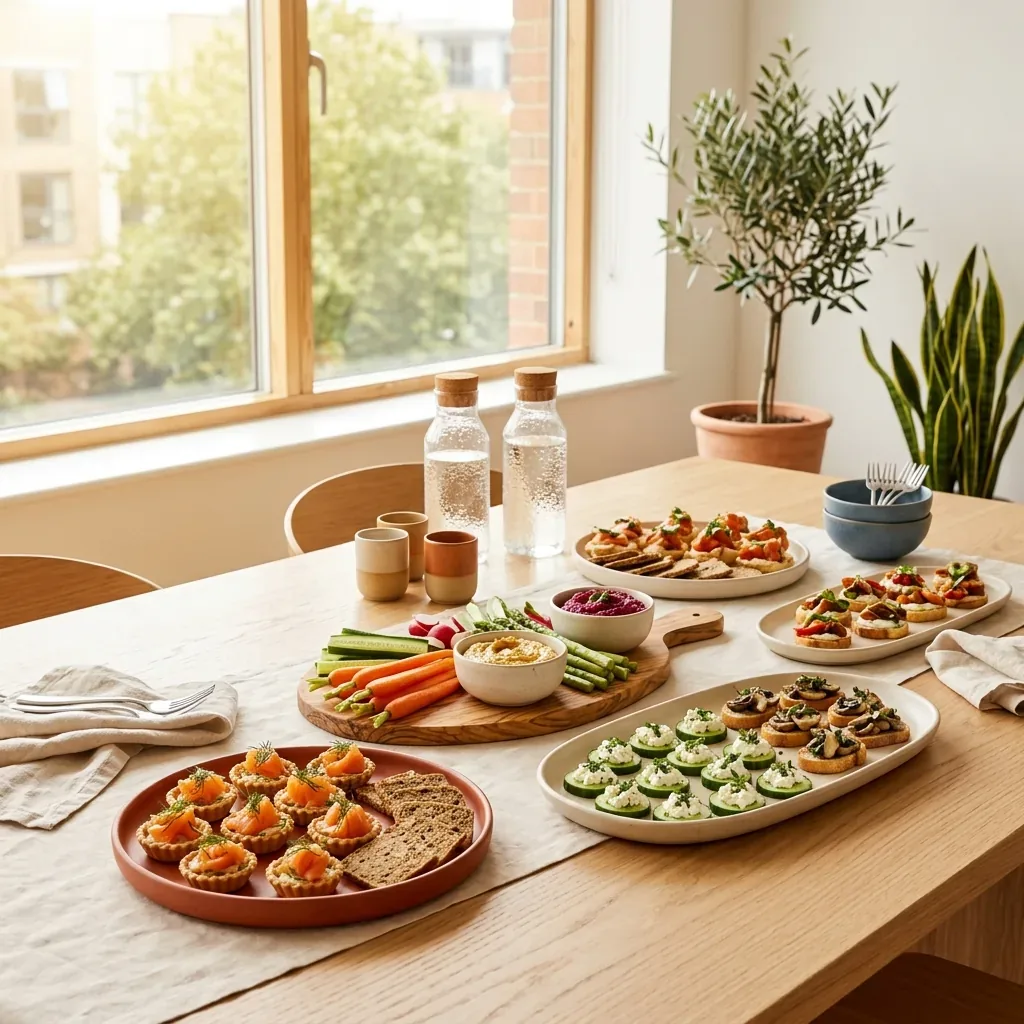
A styled celebration table laid with shared food, boards and small bites.

The OH! approach

A beautiful party table,
ready when your guests arrive.

01

Floor plan before menu

A reception is decided at the doorway. A display placed where people arrive holds the first twenty guests in the entrance and stalls everyone behind them, so we set it deep in the space to pull arrivals through, keep a second clear surface near the door for glasses, and leave a lane between the two so the two queues never merge. Where the bar is already fixed, the food goes on the far diagonal.

02

The two-hour arc

A standing event has a predictable shape: heavy arrival for the first twenty-five minutes, a quieter middle while conversation settles, then a hard return to the food after any speech. Putting everything out at the start means the display looks picked over exactly when the crowd is at its fullest. We hold back a planned second wave for the post-speech return, which costs nothing extra and changes how the evening photographs.

03

How many pieces per guest

Piece counts are the number to get right, and a slider or a filled brioche counts as two pieces, never one.

  • One-hour reception before a dinner elsewhere — four to six pieces per guest
  • Two-hour reception with no meal after — ten to twelve pieces per guest
  • Three-hour standing event — fourteen to sixteen, with a third of that in substantial pieces
  • Thirty guests at a two-hour reception works out near 360 individual pieces
04

Standing-format rules

Everything is designed for one hand, because the other one is holding a drink. Two-bite pieces on a firm base, no bones, no knife work, sauces contained in the piece so nothing pools on a plate, and nothing with a thirty-second window between the kitchen and the mouth. At least a third of the menu stays vegetarian and is spread across the display, so a guest with restrictions serves themselves without interviewing a stranger.

05

Hot and cold, and why the split matters

Hot pieces arrive in waves and vanish, which makes them read as more generous than their count. They also need oven or plug access, a staging surface out of sight, and somebody to move them. Roughly one third hot to two thirds cold suits a two-hour reception. An all-cold menu is a deliberate, well-built choice for a space with no kitchen, and it holds its appearance far better than hot food ferried in from somewhere else.

  • Cold — tartlets, crostini, cured items, marinated vegetables, chilled spoons
  • Hot — arancini, skewers, filled pastry, warm sliders
  • All-cold menus planned deliberately for kitchen-free spaces
  • Nothing that needs a knife, drips, or leaves a bone behind
06

Six to eight items, done properly

Under fifty guests, six to eight distinct canapés is where variety stops helping. Past that, guests lose track of what they have tried, the kitchen hours climb, the display looks no fuller and the labelling gets crowded. Depth beats breadth on a standing menu, and the saving shows up in the quantity of the items people actually want a second of.

07

The floor plan questions we ask

Private rooms, offices, studios, galleries and homes all work. What gets confirmed before a quote is fixed:

  • Surface length and depth, and whether both long sides are reachable
  • The route in: loading door, lift, stairs, and how far the carry is
  • A protected setup window before doors, agreed with whoever holds the booking
  • Where used plates and glasses go, and who clears them during the evening
  • Any supplier requirements the venue imposes, raised at quote stage and settled in writing
08

Labelling food smaller than its card

Canapés are the hardest food to label, because the piece is smaller than the card describing it. We group cards by run, name each item in plain language and name the common allergens it carries, and skip icon legends that ask a guest holding a drink to decode a key.

09

Service staff, bar and what sits outside our scope

A styled reception table is self-serve by design: it is built, replenished on the plan agreed for your date, and packed down at the end. Dedicated service staff on the floor for the evening is quoted per event, so ask when you enquire and the answer comes back with your quote. Beverage service and bartending sit outside what OH! does; we plan the food around your bar arrangement and tell you where to keep glassware so the two never collide on one surface.

10

The paperwork a venue will ask for

OH! works out of a rented licensed commercial kitchen in Ottawa. There is no liability policy in OH!'s own name today, so a venue-specific certificate of insurance is something we cannot supply. Venues in Ottawa routinely ask suppliers for one, so raise it with us early and you get a straight answer for your date and venue in writing.

11

Dietary handling in a standing crowd

Nobody wants to interrogate a display while holding a glass, so every item carries a card. Share dietary preferences and allergy information when you enquire. We plan suitable choices and label the table clearly. For severe or life-threatening allergies we talk through cross-contact before you book, and we cannot guarantee allergen-free preparation on a shared table.

12

Booking a reception

Two to four weeks is a comfortable planning window for a styled table. December dates, long-weekend Saturdays and shower season fill earliest, and short-notice weekday events are always worth asking about. We serve the City of Ottawa, Ontario. Kanata, Stittsville, Nepean, Barrhaven, Westboro, the central neighbourhoods, Orléans, Manotick and Riverside South sit inside the standard delivery area, where delivery and on-site styling are $45. Past 25 km the delivery charge is quoted for your address and appears on the quote before you book. Styled tables start at $42 per guest, plus applicable taxes, and the working range runs $42–$65 per guest, with the top of it being tables that replace a meal. Your quote is built from four things: guest count, table format, how long the event runs and the setup the room needs, and it separates food, styling and delivery so each part of the number is visible. The event minimum is $600 before delivery and taxes.

Questions, answered

Before you
say OH!

How far in advance should I book catering in Ottawa?

Two to four weeks is a comfortable planning window for a styled table. December dates, long-weekend Saturdays and shower season fill earliest, and short-notice weekday events are always worth asking about.

How do you handle allergies and dietary requirements?

Share dietary preferences and allergy information when you enquire. We plan suitable choices and label the table clearly. For severe or life-threatening allergies we talk through cross-contact before you book, and we cannot guarantee allergen-free preparation on a shared table.

What does a styled table cost?

Styled tables start at $42 per guest, plus applicable taxes, and the working range runs $42–$65 per guest, with the top of it being tables that replace a meal. Your quote is built from four things: guest count, table format, how long the event runs and the setup the room needs, and it separates food, styling and delivery so each part of the number is visible. The event minimum is $600 before delivery and taxes. Delivery and on-site styling are $45 within 25 km. Past that, the charge is quoted for your address before you book.

What are the deposit, cancellation and final-count terms?

A 30% deposit and a signed quote hold your date, and the balance is due 3 days before the event. Move or cancel more than 14 days out and the deposit is refunded; inside that window it covers the sourcing already committed. Final guest count is due 7 days before the event. After that the shopping list is set: numbers can still rise, and the count stops coming down. Every figure is quoted plus applicable taxes.

Where do you deliver?

We serve the City of Ottawa, Ontario. Kanata, Stittsville, Nepean, Barrhaven, Westboro, the central neighbourhoods, Orléans, Manotick and Riverside South sit inside the standard delivery area, where delivery and on-site styling are $45. Past 25 km the delivery charge is quoted for your address and appears on the quote before you book.

How do I reach you?

Call +1 613 710-0554 with your date, guest count and neighbourhood, or send the same details through the enquiry form. We answer every enquiry within one business day, and the reply names the next step and the date being held while we talk.

What happens after I enquire?

We answer every enquiry within one business day, and the reply names the next step and the date being held while we talk. You send the date, guest count, neighbourhood and a sentence about the room. We reply with a starting format and the two or three questions that move the quote. You get one written quote separating food, styling, delivery and travel, with terms attached. A signed quote and deposit hold the date, then the menu is finalised around season and dietary needs. We arrive ahead of guests, build the table in the room and take the serving pieces away afterwards.

Do you provide bar service or bartenders?

Beverage service sits outside what we do. We plan the food around your bar arrangement and tell you where to keep glassware so the two do not collide on one surface.

Can the table be replenished during the event?

Yes, and for anything over ninety minutes we recommend it. Replenishment is quoted with the event because it changes both the quantity and whether someone needs to stay on site.

What is the difference between a canapé and an hors d’oeuvre?

In practice they are used interchangeably in Ottawa. Traditionally a canapé sits on a base — pastry, crostini, a spoon — and finishes in one or two bites, while hors d’oeuvre is the wider category of anything served before or instead of a meal. We plan both by piece count and by bite size, which is what actually affects your quantity.

Can you serve canapés without a kitchen in the room?

Yes. An all-cold menu is designed for exactly that and holds its appearance far better than hot food ferried from elsewhere. Tell us what the room has and the menu is planned to it.

Have a date in mind?

Let’s make the table the easiest part of the party.

Request your date →