
A catering franchise in Canada is the right to run a catering business under another company's name, recipes and operating system, paid for with an upfront fee and a continuing royalty. Two catering-type brands in the Canadian Franchise Association (CFA) directory publish franchise fees of $25,000 and $34,500 and total investments of $250,000 and $420,000, and Graze Craze, a US charcuterie franchise whose first Canadian store in Stoney Creek was set to open in May 2026, was reported at $175,000 to $250,000 USD. Seven provinces have franchise statutes, and in Ontario the franchisor must hand you a disclosure document at least 14 days before you sign or pay anything.
The legal test is the one a buyer in Ottawa, Toronto or Hamilton should know first. Section 1(1) of Ontario's Arthur Wishart Act calls an arrangement a franchise when three things are present: you pay the franchisor, directly or indirectly, to start or to run the business; what you sell is "substantially associated with a trade-mark, trade name, logo or advertising" of the franchisor; and the franchisor has the right to exercise significant control over, or give significant assistance in, your method of operation, which the Act lists as "building design and furnishings, locations, business organization, marketing techniques or training". A contract called a licence, a partner programme or a brand agreement is measured against the same three elements.
In catering those elements become a concrete package. The trade-mark is the name on the van, the boxes, the labels and the website. The method of operation is the menu and recipe book, the portion and presentation standards, the operations manual, the training, the booking and pricing system, and the list of suppliers you buy from. A territory may be part of it: some franchisors grant an exclusive area, others grant a location and keep the right to sell online into it. You buy the use of all this for a fixed term, and the franchise agreement says what happens to the name, the recipes and your client list when that term ends or is not renewed.
The money comes in three layers. The first is the initial franchise fee: John L. Rogers, a senior franchise lawyer writing in the CFA's Franchise Canada magazine in 2020, puts it "often between $25,000 and $60,000". The second is the continuing royalty, which he says "will usually be five per cent, but might be higher", plus an advertising fee of "typically two to three per cent", both charged on monthly gross sales. The third is everything needed to open: equipment, a vehicle, kitchen access, opening inventory, insurance, permits and working capital. BDC, writing in 2025, adds that the franchise fee is usually paid once "and then again upon renewal of the franchise agreement", and that within the CFA's membership initial investments "range from under $50,000 to more than $500,000".
Three catering-type brands have figures a Canadian buyer can check. The Lunch Lady Group runs two brands, the Lunch Lady and Kids Kitchen, serving childcare centres, camps, seniors, non-profit organizations and school meal programmes; its CFA listing shows a $25K franchise fee plus tax, a $250K investment, 15 units in Canada and one week of initial training at head office. WingsUp! does takeout, delivery and catering of fresh chicken wings; its listing shows a $34.5K fee, a $420K investment and 38 units in Canada. Graze Craze, a Florida-based charcuterie franchise built around "convenience, catering, presentation, and grab-and-go accessibility", chose 312 Gray Road in Stoney Creek for its first Canadian location; Retail Insider reported on 12 May 2026 that the store was scheduled to open officially on 21 May, with an investment of about $175,000 to $250,000 USD and stores of 500 to 1,400 square feet.
The published investment is the start of the bill. Sherry McNeil, President and CEO of the CFA, told BDC in 2025 that buyers should work out "how much capital is needed to get through the first year or the first 24 months", and that the cash a brand and a bank ask you to put in is often "a percentage of the total investment"; her example was 30% of a $1 million location. Applied to a $250,000 catering franchise, the same 30% share would be $75,000 of your own money before any loan, with the first year's operating cash on top.
Catering margins are thin before a royalty is added, and the government data shows it. ISED's financial performance data for caterers (NAICS 72232), data year 2024, covers 4,009 Canadian businesses with revenue between $30,000 and $5 million: average revenue was $463.3 thousand, average expenses $425.2 thousand and average net profit $38.1 thousand. The smallest quarter of caterers, with revenue of $30,000 to $70,000, averaged $46.2 thousand in revenue and $9.7 thousand in net profit; the lower-middle quarter averaged $113.6 thousand in revenue and $16.9 thousand in profit. On that $113.6 thousand, a 5% royalty would be about $5,700 a year and a 3% advertising fee about $3,400. These are Canada-wide averages for all caterers in that revenue range, incorporated or not, and they say nothing about any one brand; our guide to the Arthur Wishart Act explains what an Ontario franchisor must show behind any earnings figure it gives you.
Seven provinces have franchise legislation: British Columbia, Alberta, Manitoba, Ontario, New Brunswick, Prince Edward Island and, from 30 June 2026, Saskatchewan, according to the CFA. Ontario's Act applies when the franchised business is "to be operated partly or wholly in Ontario" (s. 2(1)). The franchisor must deliver the disclosure document at least 14 days before the earlier of your signing any agreement relating to the franchise or paying anything for it (s. 5(1)). If the document comes late or misses required content, you may rescind within 60 days of receiving it; if it never comes, within two years of signing (s. 6(1)–(2)). Every Ontario franchise agreement also carries a duty of fair dealing on both sides (s. 3(1)). Our guide to franchise disclosure laws by province compares the other six statutes.
Three routes lead into catering, and each one trades money for something. A franchise sells you a tested menu, a name and a system, and charges for them upfront and every month; BDC names the cost in control plainly: "Most franchises have strict brand guidelines that must be adhered to, leaving less room for personal creativity." An independent start keeps every dollar of sales and every decision with you, and you build the menu, the prices and the reputation yourself. Buying an existing catering business gets you equipment, recipes, clients and booked dates on day one, and the price reflects them: ask for three years of financial statements, the booking calendar, supplier invoices and the reasons the owner is selling.
One detail matters when the business for sale is itself a franchised unit. In Ontario the disclosure duty does not apply when a franchisee sells its own unit for its own account and the sale is not "effected by or through the franchisor" (s. 5(7)(a)). The buyer then gets no statutory disclosure document, so the questions in the table below become your own due diligence, and the franchisor's consent to the transfer and the remaining term of the agreement go on the list.
Before any meeting with a catering franchisor, write down the questions in the third table and ask for each answer in writing. Call several current owners and anyone who left the system in the past year, and ask how many hours they work, what the first year cost and whether the support matched the brochure. Then budget for two paid professionals before you sign: a franchise lawyer to read the agreement and the disclosure document, and an accountant to test the numbers against your own budget. In Ontario the law gives you at least 14 days with the disclosure document before you sign or pay, and that is the time to book both.
Each location also needs its own local approvals and food safety training, whatever brand is on the door; our guide to catering licences in Ottawa covers those steps.
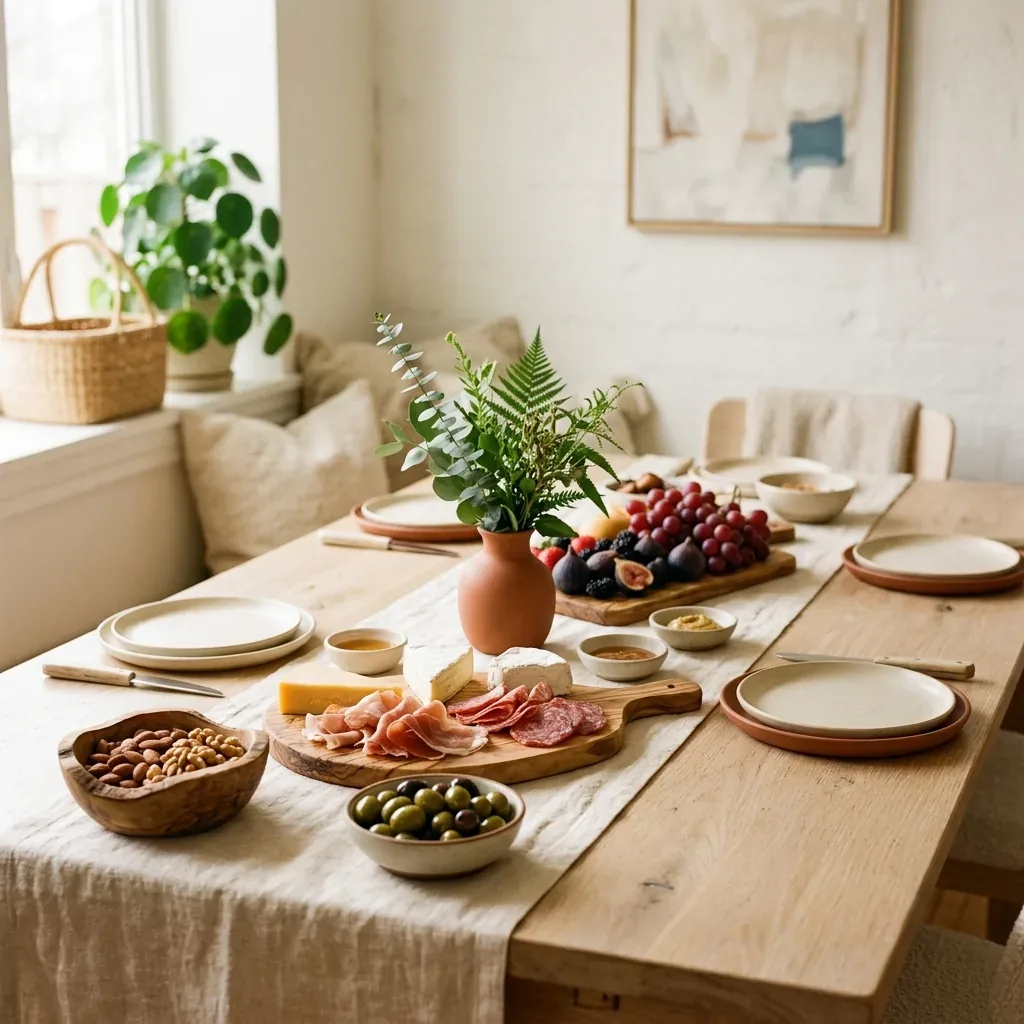
OH! Catering is a family business in Ottawa: Anastasiia Stepanenko started it in the summer of 2026 and runs it with her mother, Nataliia, building styled grazing and celebration tables for roughly 12 to 50 guests from $42 per guest, plus applicable taxes. OH! is preparing a partner programme. No terms are published yet, and any offer will come with a disclosure document before anything is signed or paid, as Ontario law requires. Interest can be registered on our catering franchise page.
Catering-type franchises in Canada with published figures, October 2026
| Brand | What it sells | Franchise fee | Total investment | Units in Canada | Where the figure comes from |
|---|---|---|---|---|---|
| The Lunch Lady (Lunch Lady, Kids Kitchen) | Meals for childcare centres, camps, seniors and school programmes | $25K plus tax | $250K | 15 | CFA directory listing |
| WingsUp! | Takeout, delivery and catering of chicken wings | $34.5K | $420K | 38 | CFA directory listing |
| Graze Craze | Charcuterie boards and cups, catering, grab-and-go | Not stated in the report | About $175,000 to $250,000 USD | First Canadian store, Stoney Creek, set to open May 2026 | Retail Insider, 12 May 2026 |
Catering franchise, independent start or buying an existing business
| Question | Catering franchise | Independent start | Buying an existing business |
|---|---|---|---|
| Name, menu and recipes | Used under licence from the franchisor | Built by you | Bought with the business, if the sale includes them |
| Upfront cost | Fee plus opening costs: $250K to $420K in the published examples | Equipment, kitchen access, insurance and permits | Purchase price plus working capital |
| Ongoing payments to a third party | Royalty, usually 5%, plus 2–3% advertising | None | None, unless the business is a franchised unit |
| Menu and price decisions | Inside the brand standards | Yours | Yours |
| Ontario disclosure document | Required 14 days before signing or paying (s. 5(1)) | Does not apply | Exempt when a franchisee sells its own unit (s. 5(7)(a)) |
| Clients on day one | Built locally under a known name | Built from zero | Existing clients and booked dates |
Questions to put to a catering franchisor, in writing
| Question | Why it matters for a catering business |
|---|---|
| What is the total initial investment, item by item, including working capital? | The fee is a small part of the bill; vehicles, equipment and kitchen access are the rest |
| What royalty and advertising percentages apply, and on gross or net sales? | On thin catering margins, two or three points of sales decide the year |
| Is there an exclusive territory, and what can take it away? | Event catering travels; a neighbour unit or the franchisor's own online orders can cover your area |
| Which suppliers must I buy from, and does the franchisor earn rebates on my purchases? | Required suppliers set your food cost |
| Who pays for training, how long is it, and where is it held? | Travel and unpaid weeks add to the opening cost |
| How many units closed in the last three years, and why? | Closures show where the model fails |
| Is any sales or profit figure backed by data I can inspect? | A figure without its basis cannot be tested |
Common questions
How much does a catering franchise cost in Canada?
$250,000 to $420,000 in total investment for the two catering-type brands with figures in the CFA directory: The Lunch Lady ($25K fee, $250K) and WingsUp! ($34.5K fee, $420K). Graze Craze, whose first Canadian store in Stoney Creek was set to open in May 2026, was reported at about $175,000 to $250,000 USD. Working capital for the first year comes on top.
What royalty do franchises charge in Canada?
About 5% of monthly gross sales is usual, according to franchise lawyer John L. Rogers writing for the Canadian Franchise Association, and it can be higher. An advertising fee of 2–3% of gross sales typically comes on top.
Which provinces have franchise laws in Canada?
Seven: British Columbia, Alberta, Manitoba, Ontario, New Brunswick, Prince Edward Island and Saskatchewan, whose law took effect on 30 June 2026. Quebec, Nova Scotia and Newfoundland and Labrador are outside that list.
Do you need a disclosure document to buy a franchise in Ontario?
Yes. The Arthur Wishart Act requires the franchisor to deliver it at least 14 days before you sign any agreement relating to the franchise or pay anything, whichever comes first (s. 5(1)). A franchisee selling its own unit for its own account is one of the exemptions (s. 5(7)(a)).
Can you start a catering business without buying a franchise?
Yes. An independent caterer pays no royalty or advertising fee and sets its own menu and prices, and it needs the same local food approvals as any other food business. The home-based guide in this series walks through the Ontario steps.
Catering Franchise in Canada — the short version
- Published catering-type franchise fees in Canada: $25K plus tax (The Lunch Lady) and $34.5K (WingsUp!).
- Published total investment: $250K (The Lunch Lady), $420K (WingsUp!); Graze Craze was reported at about $175,000 to $250,000 USD.
- Ongoing fees, per a CFA franchise lawyer: royalty usually 5% and advertising 2–3% of monthly gross sales.
- ISED, data year 2024: 4,009 Canadian caterers with revenue of $30,000 to $5 million averaged $463.3 thousand in revenue and $38.1 thousand in net profit.
- Seven provinces have franchise statutes; Saskatchewan's took effect on 30 June 2026.
- Ontario: disclosure document 14 days before you sign or pay, rescission within 60 days or 2 years.
- Buying a franchised unit from its owner, for the owner's account and not through the franchisor, is exempt from Ontario's disclosure duty.
Sources: Ontario e-Laws — Arthur Wishart Act (Franchise Disclosure), 2000, S.O. 2000, c. 3, ss. 1, 2, 3, 5, 6; Canadian Franchise Association — Saskatchewan enacts franchise disclosure legislation effective June 30, 2026; Canadian Franchise Association, LookforaFranchise.ca — The Lunch Lady Group Inc listing; Canadian Franchise Association, LookforaFranchise.ca — WingsUp! Restaurants listing; Retail Insider — Graze Craze enters Canada with first Ontario location (12 May 2026); Franchise Canada (CFA) — John L. Rogers, What are the key components of the franchise agreement?; BDC — Franchising in Canada: A path to entrepreneurship (5 September 2025); ISED Canadian Industry Statistics — Caterers (NAICS 72232), financial performance by revenue, data year 2024.
OH! Catering is preparing a franchise for styled share tables and Ukrainian dishes. Read about The OH! Catering franchise.
Thinking of opening a catering business?
OH! is looking for its first franchise partners. The application takes two minutes, and the terms come in a disclosure document before anything is signed.
Apply for the franchise