
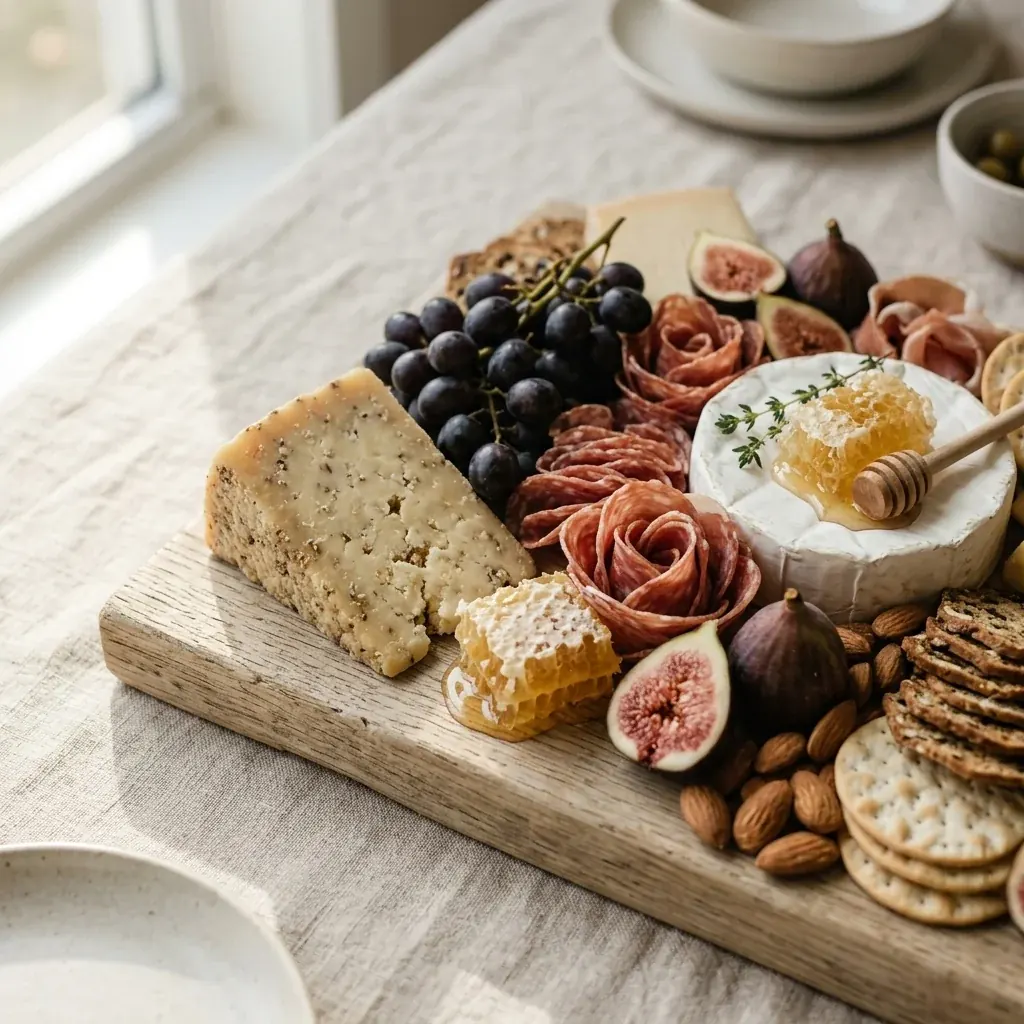
Perishable food can sit out for two hours at room temperature. Health Canada’s advice is plain: “Throw out perishable food that has been allowed to sit at room temperature for more than two hours.” On a hot day the limit drops to one hour, and the U.S. Food and Drug Administration puts that line at 90 °F, about 32 °C; the clock starts when the dish leaves the fridge or the stove.
The reason is the temperature danger zone. Health Canada sets it between 4 °C (40 °F) and 60 °C (140 °F) and warns that “bacteria can grow rapidly” in that range. A living room sits in the middle of it, so every cold dish on a party table starts warming toward it the moment it comes out. The two fixes are the ones Health Canada names: keep hot food at or above 60 °C, and keep cold food at 4 °C or colder, which is the setting it gives for a home fridge.
Perishable is the word that decides which dishes carry the clock, and on a party table it covers more than meat. Dairy is the big one: soft and hard cheese, dips made with sour cream, yogurt or mayonnaise, cream cakes, custard tarts and cheesecake. Then meat, poultry and seafood: deli meat, chicken skewers, meatballs, shrimp and smoked salmon. Health Canada also tells you to keep washed, cut fruit and sliced vegetables in the refrigerator, so the crudités and the fruit platter are on the same clock. Cooked dishes such as rice, pasta salad, potato salad, devilled eggs and quiche count too, because Health Canada’s rule for leftovers is to refrigerate them within two hours.
Some foods hold all evening because they are kept at room temperature to begin with: bread, crackers, chips, whole uncut fruit, nuts, dried fruit, cookies, brownies and sweets without cream or custard. Their limit is quality: bread dries at the cut edge, crackers soften in a humid room and chocolate goes dull. Hard cheese sits between the two groups. It keeps its shape longer than brie, and it is still dairy, so OH! keeps it on the same clock as every other cheese.
The plan for a home party starts with small batches. The FDA’s buffet advice is to prepare a number of small platters ahead of time and to “replace nearly empty serving dishes with freshly filled ones”, and Health Canada says the same thing from the other side: never add new food to a serving dish already in use, and use a clean platter each time you restock. So split each cold dish across two or three platters, put one out, keep the rest in the fridge, and swap a full platter for the tired one at the two-hour mark or sooner. The half-eaten platter goes back to the kitchen.
Ice and heat cover the gap between swaps. Health Canada’s holiday advice is to “keep cold foods cold by putting serving trays on crushed ice”, and to keep hot food hot with warming trays, chafing dishes or crock pots. In practice: set the shrimp bowl and the dip bowls into a wider tray of crushed ice, and drain it as it melts; run meatballs and wings from a slow cooker on its warm setting, which the FDA says should hold food at 140 °F (60 °C) or warmer. Health Canada also asks for a serving spoon or tongs with every dish, finger foods and nuts included, so fewer hands go into the bowls.
Rooms change the clock. A December living room with the oven on, a fire lit and thirty guests runs warm, and a garden table in July can pass 32 °C in the sun, where the one-hour limit applies. At the end of the night, Health Canada’s advice is to refrigerate leftovers promptly in uncovered, shallow containers so they cool quickly, and to throw away anything that has been at room temperature for more than two hours. The table below sets out each common party food, how long it holds at room temperature and what to do with it.
Here is what OH! does on a styled table, so you can see the rule at work. The table is built on your surface in 45 to 90 minutes, finished before guests arrive. A table holding dairy and cured meat comes down after about two hours at room temperature, and after about one hour once the space is warmer than about 32 °C. A party that runs longer is planned in two waves: the second is boxed and left in your fridge, and it goes out fresh when the first comes down. Tempered chocolate work softens above about 24 °C, so in a warm room it is the last thing set out. Hot dishes are quoted per event (varenyky filled with potato or with potato and cheese, finished with fried onions and sour cream, and grilled Ukrainian sausage), and our hot buffet page explains how they follow the same clock. Our grazing tables page shows how a full table is composed and sized for the guest count.
At OH!’s published prices, a styled table for 20 guests comes to $840 for the food and the build at $42 per guest, or $885 with the $45 delivery and on-site styling within 25 km, plus applicable taxes. Thirty guests come to $1,305. The $600 event minimum applies to smaller groups. Our party platters page covers the same food on boards and trays, and our pricing page sets out every term.
Two to four weeks is a comfortable planning window for a styled table. December dates, long-weekend Saturdays and shower season fill earliest, and short-notice weekday events are always worth asking about. A 30% deposit and a signed quote hold the date, and the final count is due 7 days before the party. Send the date, the guest count, how long the party runs and your neighbourhood; the reply usually comes within an hour, and always within one business day.
How long party food can sit out at room temperature, and what to do
| Party food | How long at room temperature | What to do |
|---|---|---|
| Cheese, soft and hard | About two hours; about one hour above 32 °C | Small boards; the second board waits in the fridge |
| Dips with sour cream, yogurt or mayonnaise | About two hours; about one hour above 32 °C | Set the bowl into a tray of crushed ice |
| Cured and deli meat | About two hours; about one hour above 32 °C | Fold out a portion and keep the rest cold |
| Shrimp, smoked salmon and other seafood | About two hours; about one hour above 32 °C | Serve on crushed ice; replace the platter, never top it up |
| Meatballs, wings, chicken skewers | Held hot at 60 °C or above; two hours once they cool | Chafing dish, warming tray or slow cooker on warm |
| Cut fruit and sliced vegetables | About two hours; about one hour above 32 °C | Cut in batches; the second batch stays in the fridge |
| Rice, pasta and potato salads | About two hours; about one hour above 32 °C | Shallow bowls, refilled with a clean bowl from the fridge |
| Devilled eggs and quiche | About two hours; about one hour above 32 °C | Small trays, swapped at the two-hour mark |
| Cream cakes, custard tarts, cheesecake | About two hours; about one hour above 32 °C | Keep in the fridge until dessert |
| Bread, crackers and chips | Through the party; quality sets the limit | Cover the bread so the cut edge stays soft |
| Whole fruit, nuts and dried fruit | Through the party; quality sets the limit | A spoon or tongs in every bowl, refilled from a clean bowl |
| Cookies, brownies and chocolate | Through the party; quality sets the limit; chocolate softens above 24 °C | Keep away from the oven, the fire and direct sun |
Common questions
How long can food sit out before it is unsafe?
Two hours for perishable food at room temperature, according to Health Canada, and one hour on a hot day; the FDA sets that line at 90 °F, about 32 °C. After that, refrigerate it if it is still inside the window, or throw it out.
What is the temperature danger zone for food?
Between 4 °C and 60 °C (40 °F to 140 °F), in Health Canada’s words, where bacteria can grow rapidly. Room temperature sits inside it, which is why cold party food is kept at 4 °C or below until it goes out and hot food at 60 °C or above.
Which party foods can stay out longer than two hours?
Bread, crackers, chips, whole uncut fruit, nuts, dried fruit and baked sweets without cream or custard sit outside the two-hour rule, because they are kept at room temperature anyway. Their limit is quality: they dry out, soften or go stale.
Can food go back in the fridge after sitting out at a party?
Yes, inside two hours. Health Canada’s advice is to refrigerate leftovers within two hours in uncovered, shallow containers so they cool quickly, and to throw away perishable food left out longer.
How do you keep cold food cold at a party?
Two habits do most of the work: set cold serving trays on crushed ice, as Health Canada advises, and put out small platters while the rest waits in the fridge. Swap a full platter for the old one rather than topping it up.
How Long Can Food Sit Out at a Party — the short version
- Perishable food: two hours at room temperature, then into the fridge or the bin (Health Canada).
- Hot days: one hour, above 90 °F or about 32 °C (FDA).
- Danger zone: 4 °C to 60 °C (40 °F to 140 °F); keep hot food at 60 °C or above and cold food at 4 °C or below (Health Canada).
- High-risk: cheese and dairy dips, meat and seafood, cut fruit and vegetables, rice and other cooked dishes, cream desserts.
- Small platters swapped from the fridge, crushed ice under cold trays, chafing dishes or slow cookers for hot food.
- An OH! styled table for 20: $885 with delivery and on-site styling, plus applicable taxes.
Sources: Health Canada, Holiday food safety, read November 15, 2026; Health Canada, Food safety and you, read November 15, 2026; Health Canada, Summer food safety tips, read November 15, 2026; U.S. Food and Drug Administration, Serving Up Safe Buffets, read November 15, 2026.
Planning this kind of event in Ottawa? Read how OH! handles Party Platters & Party Trays in Ottawa, or browse the service areas we cover.
Planning something in Ottawa?
Tell us the date, guest count and the feeling you want. We’ll help shape the table around it.
Plan your table